Contents7
Learning how to pray salah means learning a fixed sequence: 14 steps, from a silent intention to a closing salam. The words are short, and many repeat — Al-Fatiha, the opening chapter of the Qur'an, is said in every single unit.
Before You Begin
Three things must be in place before you start. You do not need a mosque.
Wudu — ritual purity
Wash hands, mouth, nose, face, forearms, head, ears and feet in the prescribed order. Wudu is required before every prayer.
Face the Qibla
Stand facing Mecca. A compass or qibla app will find the direction. When you are genuinely unsure, your best estimate is accepted.
A clean place
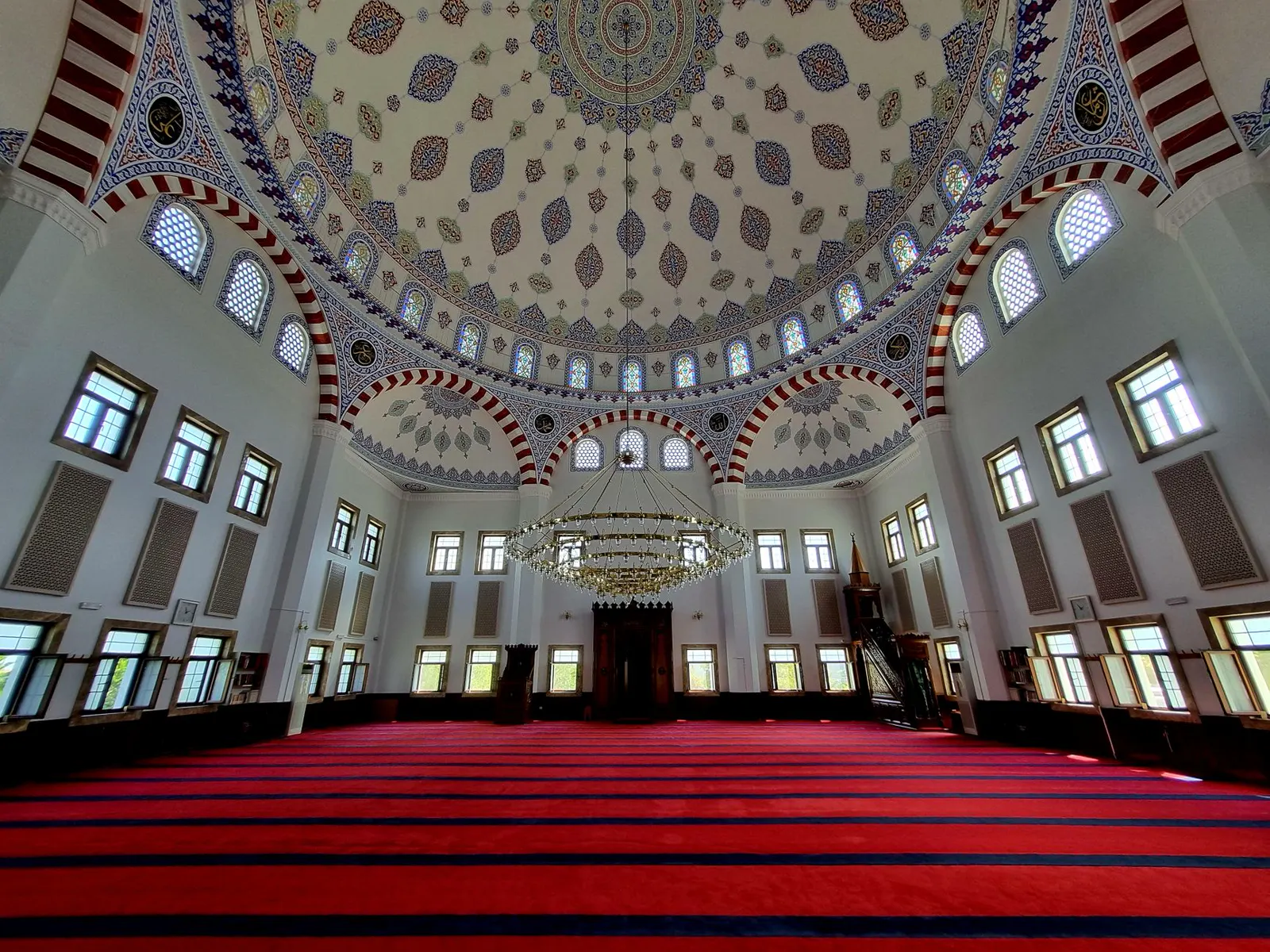
Any clean floor works. A prayer mat marks the space and is traditional, but it is not a condition for the prayer to be valid.
Modest clothing
Cover the awrah — for men, navel to knee; for women, the whole body except face and hands.
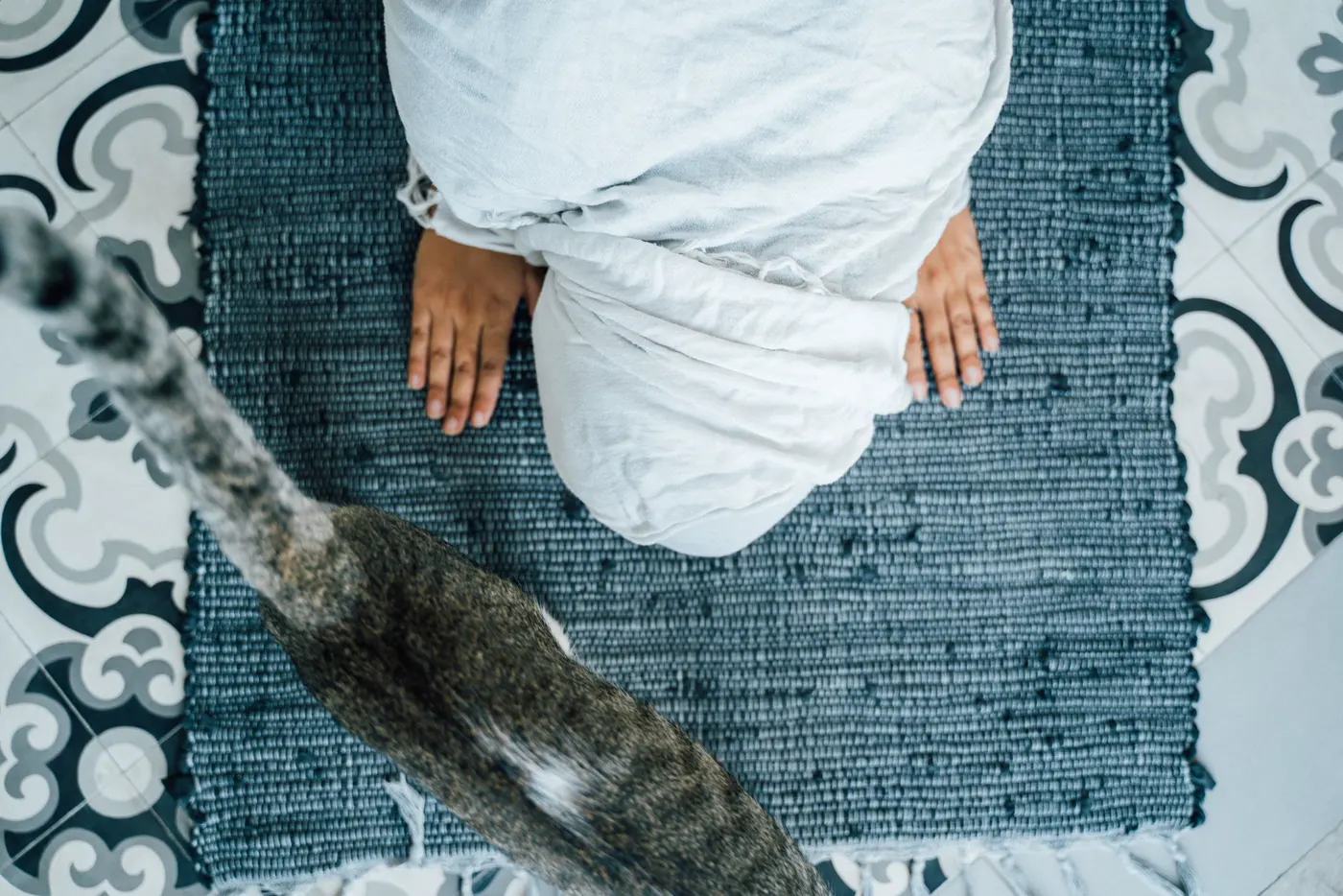
Wudu is broken by sleep, using the toilet, or passing wind. If you are not sure yours is still valid, renew it — it takes only a few minutes and brings a moment of quiet before the prayer.
The Structure: Rak'ahs and Steps
A salah is made of rak'ahs — units of prayer, each containing the same core movements. Fajr has 2, Maghrib has 3, and Dhuhr, Asr and Isha each have 4. The 14 steps span those units: the opening and closing ones happen only once, while the middle steps repeat with every rak'ah.
- 1Once, at the start
Niyyah — Intention
Stand upright, facing the Qibla. Set your intention in your heart. Nothing is said aloud.
- 2Once, at the start
Opening Takbir
Raise both hands and say Allahu akbar. The prayer has begun — ordinary speech is no longer allowed.
- 3Once, at the start
Opening supplications
Two short phrases said quietly: the istiftah and the taawwudh. First unit only.
- 4Every unit
Al-Fatiha + a short surah
Al-Fatiha in every rak'ah. A short Qur'anic passage follows in the first two units.
- 5Every unit
Ruku — bowing
Bow until your back is flat. Say the glorification three times, then rise fully.
- 6Every unit
Sujud — prostrating twice
Seven points touch the ground. Say the glorification three times. Sit briefly between the two prostrations.
- 7After every 2 units
Tashahhud + Salawat
Sit and recite the testimony of faith. In the final sitting, add the salutations on the Prophet ﷺ.
- 8Once, at the end
Taslim — the closing salam
Turn your head to the right, then to the left. The prayer is over.
The Standing: What to Say
The prayer opens in a standing position. Five steps happen before you bow.
The intention (niyyah) is not spoken aloud. It belongs to the heart — simply know which prayer you are performing. The four schools agree that saying it out loud is not part of the prayer.
Opening Takbir
Raise both hands to the level of your shoulders or ears, then place your right hand over your left.
اللَّهُ أَكْبَرُ
Allaahu akbar
Allah is the Greatest.
This Takbir opens the prayer. From here on, ordinary speech and movement are no longer allowed.
The takbir enters you into the prayer. After it, speech is governed by the prayer alone — you no longer speak outside the prescribed words.
Opening supplication
Standing, hands folded over the chest or the stomach.
سُبْحَانَكَ اللَّهُمَّ وَبِحَمْدِكَ، وَتَبَارَكَ اسْمُكَ، وَتَعَالَى جَدُّكَ، وَلَا إِلَهَ غَيْرُكَ
Subhaanaka Allaahumma wa bihamdika, wa tabaaraka smuka, wa ta'aalaa jadduka, wa laa ilaaha ghayruk
Glory be to You, O Allah, and all praise is Yours. Blessed is Your name, exalted is Your majesty, and there is no god but You.
A recommended act (sunnah), said once, quietly, at the start of the first unit only. Other wordings are also transmitted.
Seeking refuge
Still standing, hands folded.
أَعُوذُ بِاللَّهِ مِنَ الشَّيْطَانِ الرَّجِيمِ
A'oodhu billaahi mina sh-shaytaani r-rajeem
I seek refuge in Allah from Satan, the rejected.
Said quietly before the first recitation of the Qur'an.
Both are said quietly. The schools agree they are recommended (sunnah), not obligatory — if you do not know them yet, you can begin straight with Al-Fatiha and add them later.
Al-Fatiha
Standing, hands folded, gaze lowered.
بِسْمِ اللَّهِ الرَّحْمَٰنِ الرَّحِيمِ
Bismillaahi r-Rahmaani r-Raheem
In the name of Allah, the Most Gracious, the Most Merciful.
الْحَمْدُ لِلَّهِ رَبِّ الْعَالَمِينَ
Al-hamdu lillaahi Rabbi l-'aalameen
All praise is due to Allah, Lord of all the worlds,
الرَّحْمَٰنِ الرَّحِيمِ
Ar-Rahmaani r-Raheem
the Most Gracious, the Most Merciful,
مَالِكِ يَوْمِ الدِّينِ
Maaliki yawmi d-deen
Master of the Day of Judgement.
إِيَّاكَ نَعْبُدُ وَإِيَّاكَ نَسْتَعِينُ
Iyyaaka na'budu wa iyyaaka nasta'een
You alone we worship, and You alone we ask for help.
اهْدِنَا الصِّرَاطَ الْمُسْتَقِيمَ
Ihdinaa s-siraata l-mustaqeem
Guide us to the straight path,
صِرَاطَ الَّذِينَ أَنْعَمْتَ عَلَيْهِمْ غَيْرِ الْمَغْضُوبِ عَلَيْهِمْ وَلَا الضَّالِّينَ
Siraata lladheena an'amta 'alayhim ghayri l-maghdoobi 'alayhim wa laa d-daalleen
the path of those You have blessed — not of those who earned Your anger, nor of those who went astray.
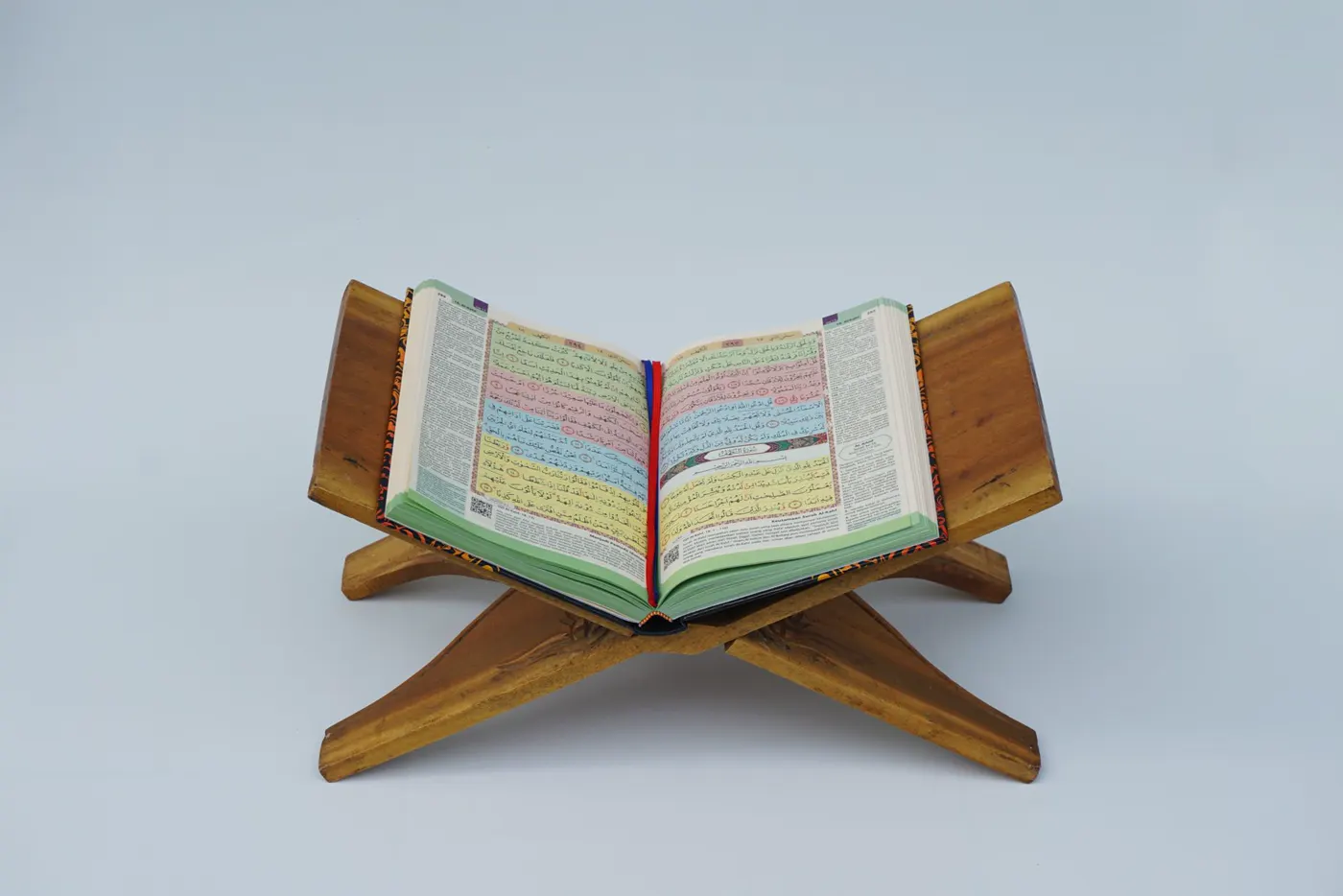
The Fatiha is recited in every single unit of prayer. Say "Aameen" after it. It is the one recitation no unit can be valid without.
Al-Fatiha is the spine of salah. The Prophet ﷺ said: "Whoever does not recite Al-Fatiha in his prayer, his prayer is invalid." (Bukhari 756, Muslim 394.) After it, say Aameen — quietly or aloud, depending on the school and the prayer.
A short surah
Standing, hands folded.
قُلْ هُوَ اللَّهُ أَحَدٌ
Qul huwa Llaahu ahad
Say: He is Allah, the One.
اللَّهُ الصَّمَدُ
Allaahu s-samad
Allah, the Eternal Refuge.
لَمْ يَلِدْ وَلَمْ يُولَدْ
Lam yalid wa lam yoolad
He neither begets nor is born,
وَلَمْ يَكُنْ لَهُ كُفُوًا أَحَدٌ
Wa lam yakun lahu kufuwan ahad
and there is none comparable to Him.
Any passage of the Qur'an you know may be recited here — Al-Ikhlas is shown because it is short and easy to memorise. Added in the first two units only.
Any passage of the Qur'an you know may be used here. Al-Ikhlas is shown because it is short and easy to memorise. It is added in the first two rak'ahs only.
Bowing and Prostrating
Each change of posture is announced with Allahu akbar — say it as you move into the new position.
Ruku — bowing
Say "Allahu akbar", bow so that your back is level, hands gripping the knees, head in line with the back.
سُبْحَانَ رَبِّيَ الْعَظِيمِ
Subhaana Rabbiya l-'Adheem
Glory be to my Lord, the Most Great.
Said three times. Be still — do not rush out of the position.
Standing up from bowing
Rise fully upright, arms at your sides, and stand still before going down.
سَمِعَ اللَّهُ لِمَنْ حَمِدَهُ
Sami'a Llaahu liman hamidah
Allah hears the one who praises Him.
رَبَّنَا وَلَكَ الْحَمْدُ
Rabbanaa wa laka l-hamd
Our Lord, all praise is Yours.
The first phrase is said while rising, the second once standing. Praying behind an imam, you say only the second.
Sujud — prostration
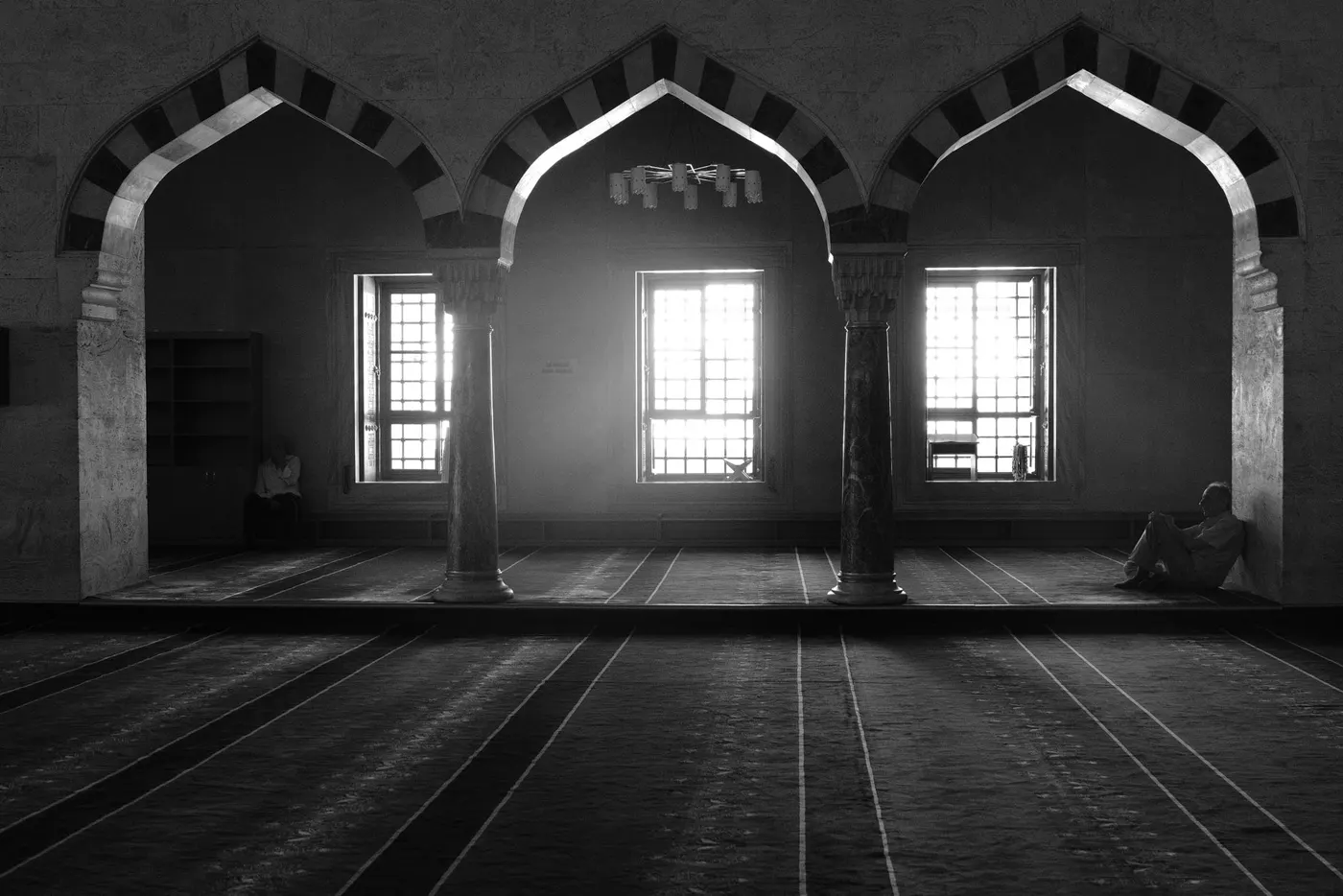
Say "Allahu akbar" and go down. Seven parts touch the ground: forehead and nose, both palms, both knees, the toes of both feet.
سُبْحَانَ رَبِّيَ الْأَعْلَى
Subhaana Rabbiya l-A'laa
Glory be to my Lord, the Most High.
Said three times. Keep the elbows off the ground and away from the sides.
Seven parts of the body must touch the ground during sujud: the forehead and nose, both palms, both knees, and the toes of both feet. Keep the elbows raised and away from the sides.
Sitting between the two prostrations
Say "Allahu akbar", sit up on your left foot with the right foot upright, hands resting on the thighs.
رَبِّ اغْفِرْ لِي
Rabbi ghfir lee
My Lord, forgive me.
Sit calmly. This short pause is part of the prayer, not a transition to rush through.
Second prostration
Say "Allahu akbar" and prostrate a second time, exactly as before.
سُبْحَانَ رَبِّيَ الْأَعْلَى
Subhaana Rabbiya l-A'laa
Glory be to my Lord, the Most High.
Said three times. This completes one unit (rak'ah). Stand up again for the next one.
The Final Sitting
After the last prostration of the last rak'ah, remain seated. Three more steps close the prayer.
Tashahhud — the testimony
Seated as between the prostrations. Both forearms rest on the thighs: the left hand flat on the left thigh, the right hand resting on the right knee, fingers folded and only the index finger extended forward. The arm is not raised — the gesture happens at knee height.
التَّحِيَّاتُ لِلَّهِ وَالصَّلَوَاتُ وَالطَّيِّبَاتُ
At-tahiyyaatu lillaahi wa s-salawaatu wa t-tayyibaat
All greetings, prayers and good things belong to Allah.
السَّلَامُ عَلَيْكَ أَيُّهَا النَّبِيُّ وَرَحْمَةُ اللَّهِ وَبَرَكَاتُهُ
As-salaamu 'alayka ayyuha n-Nabiyyu wa rahmatu Llaahi wa barakaatuh
Peace be upon you, O Prophet, and the mercy of Allah and His blessings.
السَّلَامُ عَلَيْنَا وَعَلَى عِبَادِ اللَّهِ الصَّالِحِينَ
As-salaamu 'alaynaa wa 'alaa 'ibaadi Llaahi s-saaliheen
Peace be upon us and upon the righteous servants of Allah.
أَشْهَدُ أَنْ لَا إِلَهَ إِلَّا اللَّهُ وَأَشْهَدُ أَنَّ مُحَمَّدًا عَبْدُهُ وَرَسُولُهُ
Ash-hadu an laa ilaaha illa Llaah, wa ash-hadu anna Muhammadan 'abduhu wa rasooluh
I bear witness that there is no god but Allah, and I bear witness that Muhammad is His servant and His Messenger.
Recited sitting after every two units. The schools transmit slightly different wordings — all are valid.
The Tashahhud is recited in the final sitting of every prayer, and also after the second rak'ah in the longer prayers (Dhuhr, Asr, Isha). The wordings transmitted from the Prophet ﷺ vary slightly across the schools — all are valid.
Blessings on the Prophet
Still seated, index finger still pointing.
اللَّهُمَّ صَلِّ عَلَى مُحَمَّدٍ وَعَلَى آلِ مُحَمَّدٍ، كَمَا صَلَّيْتَ عَلَى إِبْرَاهِيمَ وَعَلَى آلِ إِبْرَاهِيمَ، إِنَّكَ حَمِيدٌ مَجِيدٌ
Allaahumma salli 'alaa Muhammadin wa 'alaa aali Muhammad, kamaa sallayta 'alaa Ibraaheema wa 'alaa aali Ibraaheem, innaka Hameedun Majeed
O Allah, send Your grace upon Muhammad and the family of Muhammad, as You sent it upon Ibrahim and the family of Ibrahim. You are indeed Praiseworthy, Glorious.
اللَّهُمَّ بَارِكْ عَلَى مُحَمَّدٍ وَعَلَى آلِ مُحَمَّدٍ، كَمَا بَارَكْتَ عَلَى إِبْرَاهِيمَ وَعَلَى آلِ إِبْرَاهِيمَ، إِنَّكَ حَمِيدٌ مَجِيدٌ
Allaahumma baarik 'alaa Muhammadin wa 'alaa aali Muhammad, kamaa baarakta 'alaa Ibraaheema wa 'alaa aali Ibraaheem, innaka Hameedun Majeed
O Allah, bless Muhammad and the family of Muhammad, as You blessed Ibrahim and the family of Ibrahim. You are indeed Praiseworthy, Glorious.
Said in the final sitting, right after the Tashahhud. You may then make any personal supplication before the Salam.
Taslim — closing the prayer
Turn your head to the right, then to the left.
السَّلَامُ عَلَيْكُمْ وَرَحْمَةُ اللَّهِ
As-salaamu 'alaykum wa rahmatu Llaah
Peace be upon you, and the mercy of Allah.
Said twice — once to the right, once to the left. The prayer ends here.
The Five Daily Prayers
The five daily prayers are obligatory for every Muslim adult, confirmed in Surah Al-Baqarah 2:238. Each has a fixed number of fard (obligatory) rak'ahs — additional sunnah units may be added, but only these are required.
| Prayer | Time | Obligatory rak'ahs |
|---|---|---|
| Fajr | Before sunrise | 2 |
| Dhuhr | Midday | 4 |
| Asr | Afternoon | 4 |
| Maghrib | After sunset | 3 |
| Isha | Night | 4 |
| Total | 17 |
FAQ
What is a rak'ah?
A rak'ah is one full unit of prayer: standing with recitation, bowing, rising, then two prostrations with a brief sit between them. The count per prayer is Fajr 2, Dhuhr 4, Asr 4, Maghrib 3, Isha 4.
Do I need to memorise everything before I start?
No. Begin with the takbir and Al-Fatiha — that is enough to pray. Add the remaining texts one by one over the following days. This site is a learning aid; it does not replace a teacher, so look for a local class or scholar when you can.
Is Al-Fatiha really recited in every unit?
Yes. It is a pillar of the prayer in all four schools, established by hadith (Bukhari 756). No unit is valid without it.
What if I forget a step or make a mistake?
Minor omissions are covered by the sujud as-sahw — two extra prostrations added at the end of the prayer. For anything you are unsure about, ask a scholar. Mistakes while learning are normal and expected.
Can I read the words from a paper while I learn?
Scholars differ on this. Many permit it for a beginner who cannot yet memorise. Ask a local imam about your specific situation.
The prayer is a direct conversation with Allah. One step at a time is enough — and starting is already a great deal.